Article: Learning Thangka Art: A Beginner's Guide to Traditional Tibetan Buddhist Painting

Learning Thangka Art: A Beginner's Guide to Traditional Tibetan Buddhist Painting
Introduction: Discovering the Art of Thangka Painting
Thangka painting is more than an artistic tradition. It is a remarkable combination of creativity, spiritual devotion, cultural heritage, and Buddhist philosophy. Practised for centuries across Tibet and the Himalayan region, this traditional art form brings Buddhist teachings to life through intricate illustrations, vibrant colours, and sacred symbolism.
From peaceful Buddhas and compassionate Bodhisattvas to protective deities and elaborate mandalas, every Thangka painting communicates a deeper meaning. Each line, colour, gesture, and proportion follows established artistic principles developed and passed down through generations.
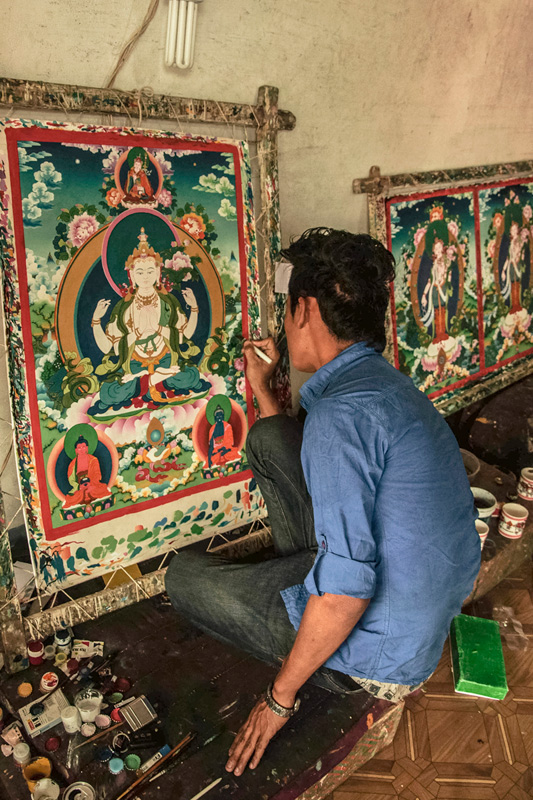
For beginners, learning Thangka art offers an opportunity to explore traditional Himalayan craftsmanship while developing patience, concentration, and artistic skills.
Whether you are an aspiring artist, an admirer of Tibetan Buddhist art, or someone interested in learning traditional painting techniques, understanding the foundations of Thangka painting is a meaningful place to begin.
In this guide, we explore what Thangka painting is, how beginners can learn its techniques, the materials involved, and the spiritual significance behind this remarkable art form.
1. Why Learn Thangka Art?
Learning traditional Thangka painting is a journey that combines artistic discipline with an understanding of Buddhist symbolism and philosophy.

Unlike conventional painting, Thangka art follows established iconographic guidelines. The proportions of Buddhist figures, their hand gestures, facial expressions, colours, and symbolic objects are carefully studied before an artist begins painting.
For beginners, this process introduces a different approach to creativity. Instead of relying entirely on imagination, students learn to observe, understand, and carefully reproduce traditional designs.
Learning Thangka painting can help develop:
-
Patience and Concentration: Repeated drawing exercises and intricate detailing require sustained attention.
-
Artistic Discipline: Traditional proportions and compositions encourage precision and consistency.
-
Cultural Appreciation: Studying Thangka introduces learners to Tibetan Buddhist history, symbolism, and Himalayan artistic traditions.
-
Creative Skills: Students gradually develop drawing, colouring, shading, and fine brushwork techniques.
-
Mindful Practice: The slow and deliberate painting process encourages focus and reflection.
For many learners, Thangka art becomes more than a painting skill. It provides a meaningful way to explore traditional art and its connection with Buddhist culture.
2. What Is Thangka Painting?
A Thangka is a traditional Tibetan Buddhist painting, usually created on cotton or silk fabric. It is commonly designed to be rolled and transported, making it suitable for display in monasteries, temples, and meditation spaces.
Traditional Thangkas depict various religious and spiritual subjects, including Buddhas, Bodhisattvas, protective deities, mandalas, Buddhist teachers, and important events from Buddhist teachings.
These paintings serve several purposes within Tibetan Buddhism. They are used as visual supports for meditation, religious instruction, devotional practices, and contemplation.
Learning to create a Thangka requires an understanding of its visual language. Artists study the proportions of sacred figures, the meanings of different mudras, traditional colour combinations, and the symbolic significance of objects held by Buddhist deities.
The goal is not simply to produce a visually attractive painting. It is to understand the artistic principles that give each Thangka its identity and meaning.
3. The Foundations of Learning Thangka Painting
For beginners, developing a strong foundation is essential before attempting complex deity compositions. Traditional Thangka painting involves several important areas of study.
3.1 Understanding Buddhist Symbolism
Before picking up a paintbrush, beginners should become familiar with the subjects and symbolism found in Buddhist art.
Every detail in a traditional Thangka carries meaning. Colours, hand gestures, postures, ornaments, and sacred objects help identify the deity and communicate particular Buddhist teachings.
For example:
-
Shakyamuni Buddha: Represents enlightenment and the teachings of Buddhism.
-
Green Tara: Symbolizes compassionate activity, protection, and the readiness to help others.
-
White Tara: Is associated with compassion, longevity, and peaceful activity.
-
Manjushree: Represents wisdom and the removal of ignorance.
-
Chenrezig: Embodies infinite compassion and the aspiration to benefit all sentient beings.
Understanding these figures helps students recognize the importance of accuracy in traditional Thangka painting.
3.2 Learning Sacred Proportions and Grid Drawing
One of the most important foundations of Thangka painting is learning traditional proportions.
Buddhist figures are drawn according to established measurements and proportional guidelines. Artists use carefully constructed grids to determine the positioning and dimensions of different body parts.
Beginners usually start by practising straight lines, geometric divisions, basic shapes, and simple figure outlines.
Gradually, they learn to draw faces, hands, eyes, ornaments, and complete deity compositions.
Although this process requires repetition, it develops the precision and discipline necessary for creating traditional Thangka paintings.
3.3 Understanding Traditional Materials and Tools
Learning about the materials used in Thangka painting is another essential part of the process.
Traditional artists work with carefully prepared canvas, mineral pigments, natural brushes, and gold detailing.
Some of the commonly used materials include:
-
Cotton or Silk Canvas: Provides the foundation for the painting.
-
Mineral Pigments: Used to create rich traditional colours.
-
Natural Brushes: Allow artists to produce delicate outlines and intricate patterns.
-
Gold: Used in selected details, ornaments, and decorative elements.
-
Traditional Ground Preparation: Helps create a smooth surface for painting.
Beginners may initially practise using modern drawing and painting materials. However, learning about traditional materials helps them understand the techniques and craftsmanship associated with Himalayan Thangka art.
4. Understanding the Traditional Thangka Painting Process
Creating a traditional Thangka involves several stages, each requiring patience, precision, and artistic knowledge.
Understanding this process gives beginners a clearer idea of how a finished painting develops.
Step 1: Preparing the Canvas
The process begins with preparing the painting surface.
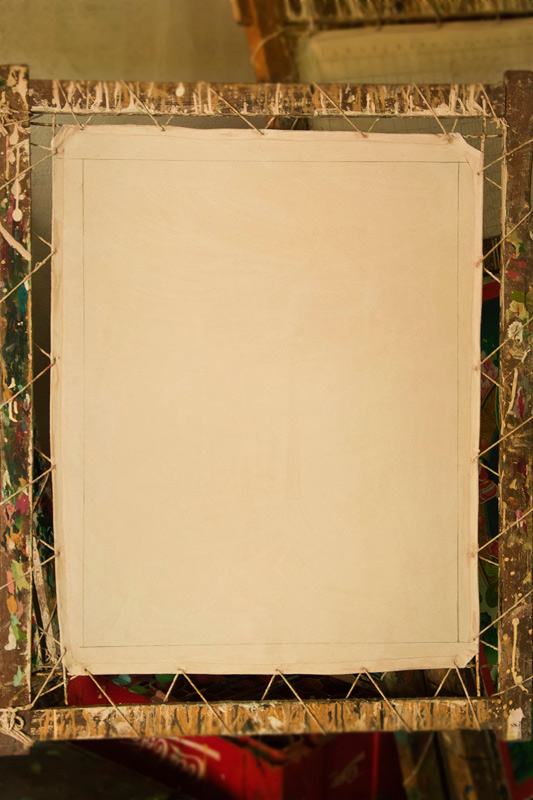
Traditionally, cotton or silk fabric is stretched over a wooden frame. A ground preparation, often made using glue and chalk, is applied to create a smooth surface suitable for drawing and painting.
The canvas is then refined to provide an even foundation for the artwork.
Step 2: Drawing the Proportional Grid
Once the canvas is prepared, the artist establishes the composition using traditional measurements and proportional guidelines.
Grid lines help determine the correct positioning and proportions of the central deity and surrounding elements.
This stage is particularly important because traditional Thangka iconography requires consistency in the representation of sacred figures.
Step 3: Creating the Initial Outline
After establishing the proportions, the artist begins drawing the main subject.
The outline may include the deity's facial features, body posture, hand gestures, clothing, ornaments, and surrounding decorative elements.
Careful attention is given to every detail to maintain the traditional structure of the composition.
Step 4: Applying the Base Colours
Once the drawing is complete, the artist begins applying the base colours.
Traditional mineral pigments are carefully prepared and applied in layers to establish the overall appearance of the painting.
The colours are selected according to the specific deity, artistic tradition, and symbolic requirements of the composition.
Step 5: Shading and Fine Detailing
The painting gradually becomes more detailed through careful shading, outlining, and decorative work.
Artists refine facial expressions, jewellery, clothing patterns, lotus petals, halos, and other symbolic elements using fine brushes.
This stage requires considerable concentration because even small details contribute to the finished appearance of the artwork.
Step 6: Gold Application and Finishing
The final stages may include the application of gold to selected areas of the painting.
Gold detailing adds decorative richness and highlights important elements such as crowns, ornaments, halos, and sacred patterns.
After the artwork is completed, it may be inspected and prepared for mounting in traditional brocade.
Some Thangkas also undergo separate consecration rituals as part of their religious use.
5. Thangka Painting as a Spiritual and Mindful Discipline
One of the most meaningful aspects of learning Thangka art is its connection with mindfulness and spiritual practice.
In traditional Buddhist artistic settings, painting can be approached as a contemplative activity. Artists may begin with prayers, mantra recitation, or the setting of intentions before working on a sacred composition.
The process encourages a calm and attentive approach to every brushstroke.
Unlike activities that require quick results, Thangka painting develops gradually. Drawing the same proportions, refining intricate details, and carefully applying pigments teach students the value of patience.
For beginners, mistakes are also an important part of learning. An inaccurate line or uneven colour becomes an opportunity to understand the technique more deeply.
Through repeated practice, students gradually develop greater control, concentration, and appreciation for the traditions behind the artwork.
This connection between artistic discipline and mindfulness is one reason Thangka painting continues to hold a special place in Tibetan Buddhist culture.
6. Who Can Learn Traditional Thangka Painting?
Thangka painting can be explored by people from different artistic and cultural backgrounds.
You do not necessarily need advanced drawing skills to begin. What matters most is a willingness to learn, practise consistently, and understand the traditions associated with the artwork.
Beginners can start with simple exercises before progressing towards detailed Buddhist figures and complex mandala compositions.
A typical learning journey may include:
For Complete Beginners: Practising lines, geometric shapes, basic proportions, and simple floral patterns.
For Developing Artists: Studying deity outlines, facial features, traditional colour combinations, and symbolic hand gestures.
For Advanced Learners: Exploring complex iconography, detailed compositions, mineral pigments, gold application, and traditional finishing techniques.
Today, Thangka painting can be studied through workshops, traditional artist training, monastery based learning environments, and guided courses.
Learning directly from experienced artists is particularly valuable because it allows students to understand techniques that are difficult to acquire through written instructions alone.
7. Why Learning Thangka Art Matters Today
In a world where creativity is often associated with speed and instant results, traditional Thangka painting offers a different experience.
It encourages people to slow down, observe carefully, and appreciate the importance of detail and discipline.
Learning this art form also contributes to the appreciation and preservation of Himalayan cultural heritage.
Traditional Thangka painting contains generations of artistic knowledge, including canvas preparation, drawing methods, pigment application, iconographic proportions, and symbolic representation.
By studying these techniques, new generations can develop an understanding of the cultural traditions behind the artwork.
For contemporary learners, Thangka art also creates an opportunity to connect artistic expression with history, philosophy, and cultural appreciation.
Its value lies not only in the completed painting but also in the knowledge and dedication developed throughout the learning process.
Conclusion: Beginning Your Journey into Sacred Thangka Painting
Learning Thangka painting is a rewarding journey that combines traditional craftsmanship, artistic development, and an understanding of Tibetan Buddhist culture.
From studying sacred proportions and Buddhist symbolism to preparing the canvas, applying mineral pigments, and adding intricate gold details, every stage introduces a new aspect of this remarkable artistic tradition.
For beginners, the journey starts with simple drawings and gradually develops into a deeper understanding of traditional iconography and painting techniques.
Whether your interest lies in Himalayan art, Buddhist philosophy, traditional craftsmanship, or mindful creative practice, Thangka painting offers an opportunity to explore all these elements together.
Every carefully drawn line and thoughtfully applied colour contributes to an artistic tradition that has continued across generations.
To learn Thangka art is not simply to learn how to paint. It is to understand the stories, symbolism, patience, and cultural heritage that make every traditional Thangka unique.