

Chenrezig (Avalokiteshvara): The Bodhisattva of Infinite Compassion and Mercy
Introduction: The Heart of Compassion
Among the most beloved figures in Tibetan Buddhism, Chenrezig, also known as Avalokiteshvara, represents the boundless compassion of an enlightened being. Revered as the Bodhisattva of Compassion, Chenrezig symbolizes the ability to hear the suffering of all sentient beings and respond with kindness, wisdom, and understanding.
In Buddhist philosophy, compassion is much more than feeling sympathy for someone experiencing difficulties. It is the willingness to understand suffering and actively work toward its alleviation. Chenrezig embodies this ideal, reminding practitioners that genuine spiritual awakening is deeply connected with caring for others.
His image is one of the most recognizable in Tibetan Buddhist art. From his peaceful expressions and lotus flowers to his extraordinary thousand armed form, every aspect of his appearance communicates a deeper message about compassion.
Through traditional Thangka paintings, Buddhist teachings, and devotional practices, Chenrezig continues to inspire people across generations. In this article, we explore his origin, sacred iconography, powerful mantra, and significance in Tibetan Buddhism.
The Origin of Chenrezig: Compassion Without Limit
Avalokiteshvara appears throughout Mahayana Buddhist teachings as the embodiment of infinite compassion.
According to a well known Buddhist narrative, Avalokiteshvara made a profound vow to help liberate all sentient beings from suffering. His commitment extended beyond individual lives, reflecting an aspiration to continue helping beings until they reached liberation.

However, as he witnessed the seemingly endless suffering of the world, the magnitude of his compassionate vow became overwhelming. Traditional accounts describe his form shattering under the weight of this immense responsibility.
Through the blessings of Amitabha Buddha, his form was transformed into a manifestation with multiple heads and numerous arms.
This extraordinary appearance became a powerful symbol of limitless compassion. His many heads represent the ability to perceive suffering throughout the world, while his numerous arms symbolize the countless ways in which he can offer assistance.
The story communicates an important Buddhist teaching: compassion must extend beyond personal boundaries. It requires patience, understanding, and an unwavering commitment to the well being of others.
Chenrezig's origin story remains one of the most meaningful narratives in Tibetan Buddhist tradition, expressing the belief that compassion is an essential part of the journey toward enlightenment.
Chenrezig Iconography: The Thousand Arms and Eyes of Compassion
One of the most distinctive representations of Chenrezig in Tibetan Buddhist art is his thousand armed and thousand eyed form.
At first glance, this depiction may appear extraordinary or complex. However, every detail carries an important symbolic meaning.
The Thousand Arms: Compassion in Action
Chenrezig's thousand arms symbolize his unlimited ability to help sentient beings.
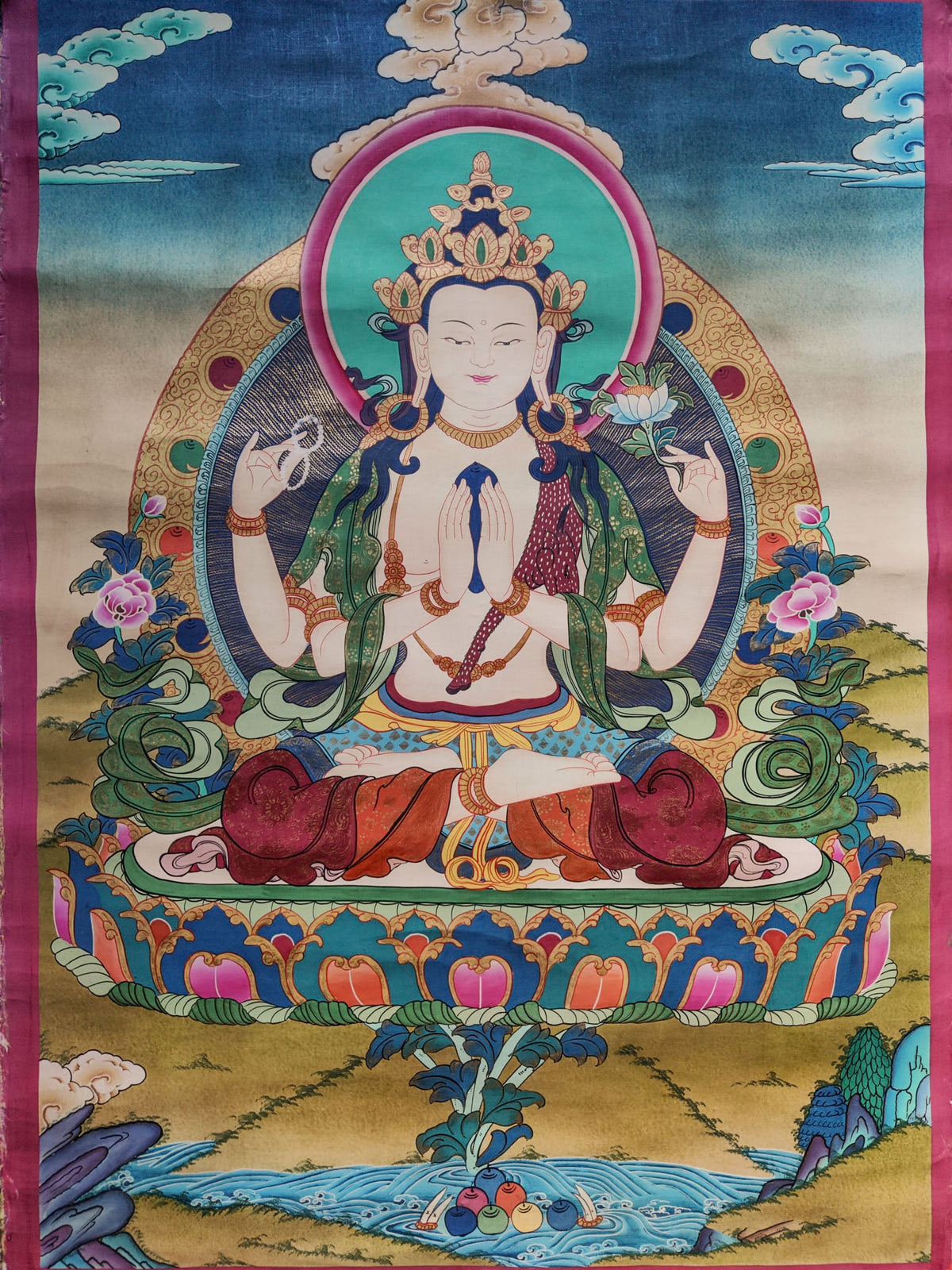
Each arm represents the different ways compassion can be expressed, whether through generosity, protection, guidance, understanding, or other acts of assistance.
Rather than representing physical strength, the numerous arms communicate the idea that compassion has no limitations when it comes to helping others.
The Thousand Eyes: Seeing the Suffering of the World
The eyes represented in his thousand armed form symbolize awareness and the ability to recognize suffering wherever it exists.
Together, the arms and eyes communicate two essential qualities: the ability to see suffering and the willingness to respond to it.
This combination represents the relationship between wisdom and compassionate action. Recognizing suffering is the beginning, but responding with meaningful assistance is equally important.
The Joined Hands: Unity and Compassionate Intention
In many representations of the thousand armed Chenrezig, the central hands are joined in prayer at the heart.
This gesture symbolizes devotion, the unity of wisdom and compassion, and the aspiration to benefit all beings.
Other hands extend outward, holding different ritual objects or displaying symbolic gestures associated with protection and assistance.
The Lotus Flower: Purity and Enlightened Awareness
The lotus is among the most important symbols in Buddhist iconography.
Chenrezig is frequently depicted holding a lotus flower, representing purity, compassion, and spiritual awakening.
A lotus grows from muddy water but blossoms beautifully above its surroundings. It symbolizes the possibility of developing wisdom and compassion even while living amid the difficulties of ordinary existence.
Through these symbolic elements, Chenrezig's appearance communicates a profound teaching: compassion begins with awareness and becomes meaningful through action.
Explore our traditional Buddhist Thangka collection.
The Sacred Mantra of Chenrezig: Om Mani Padme Hum
One of the most widely recognized mantras in Tibetan Buddhism is:
Om Mani Padme Hum
This sacred mantra is closely associated with Avalokiteshvara, or Chenrezig, and represents the essence of compassion and enlightened wisdom.
It is recited by Buddhist practitioners across the Himalayan region and throughout the world. You can hear it during prayers, meditation sessions, religious ceremonies, and devotional gatherings.
The mantra is traditionally understood through the symbolism of its six syllables.
Om: Associated with the purification and transformation of body, speech, and mind.
Ma: Connected with generosity and the cultivation of positive qualities.
Ni: Associated with patience and the development of wisdom.
Pad: Connected with diligence and perseverance.
Me: Associated with meditation and concentration.
Hum: Represents the integration of wisdom and compassionate qualities.
The mantra is traditionally connected with the cultivation of compassion and the purification of negative tendencies.
The Importance of Mantra Recitation
For practitioners, reciting Om Mani Padme Hum is more than repeating sacred words. It is a devotional practice that encourages reflection on kindness, empathy, and the well being of all sentient beings.
The repeated sound of the mantra can also provide a focus for meditation, helping practitioners maintain concentration and develop awareness.
Over time, its meaning can extend into everyday actions. A person who recites the mantra may be encouraged to become more patient, understanding, and compassionate toward others.
The mantra therefore represents not only devotion to Chenrezig but also an aspiration to develop the qualities associated with his enlightened nature.
The Philosophy of Compassion in Mahayana Buddhism
Compassion is one of the central teachings of Mahayana Buddhism. Known as Karuna in Sanskrit, it refers to the sincere wish for all sentient beings to be free from suffering.
Within Mahayana philosophy, compassion is closely connected with wisdom. These two qualities are understood as essential aspects of the path toward enlightenment.
Chenrezig represents this relationship through his identity as the Bodhisattva of Compassion.
His teachings and symbolism encourage practitioners to look beyond their own immediate concerns and recognize the shared experiences of other beings.
Understanding the Suffering of Others
Buddhist philosophy teaches that suffering is a universal aspect of conditioned existence.
People experience difficulties in different ways, but feelings such as fear, disappointment, uncertainty, and loss are familiar across human experience.
Recognizing this shared experience encourages empathy and reduces the tendency to judge others without understanding their circumstances.
Compassion and Wisdom Together
Compassion without understanding may not always lead to meaningful assistance. Similarly, wisdom without compassion can become disconnected from the needs of others.
Chenrezig represents the importance of bringing these qualities together.
His thousand eyes symbolize awareness of suffering, while his many arms represent the ability to respond.
This imagery communicates a central Mahayana teaching: genuine wisdom naturally encourages compassionate action.
By cultivating patience, mindfulness, and kindness, individuals can gradually bring these qualities into their own lives.

Chenrezig in Daily Life: Practicing Compassion Through Actions
The teachings associated with Chenrezig are not limited to monasteries, temples, or formal meditation practices.
They also offer valuable guidance for everyday living.
Compassion can be expressed through simple actions, such as listening carefully when someone needs support, showing patience during disagreements, helping someone facing difficulties, or considering how our choices affect others.
To follow the example of Chenrezig is to develop a greater awareness of the experiences and needs of those around us.
Some meaningful ways to practise compassion include:
· Practising kindness: Treating others with consideration, even during difficult situations.
· Developing patience: Taking time to understand circumstances instead of reacting immediately.
· Listening with awareness: Giving others the opportunity to express their thoughts and feelings.
· Helping without expecting rewards: Offering genuine support whenever possible.
· Cultivating empathy: Recognizing that every individual experiences challenges and difficulties.
These everyday expressions of compassion reflect the qualities represented by Chenrezig.
His symbolism reminds us that meaningful change does not always begin through extraordinary actions. Often, it begins with small decisions made with kindness and awareness.
Chenrezig in the Modern World: Why Compassion Still Matters
In today's fast moving world, people often face stress, uncertainty, social divisions, and difficulties in maintaining meaningful relationships.
Amid these challenges, the teachings associated with Chenrezig remain especially relevant.
His symbolism reminds us that compassion is not a sign of weakness. It requires patience, understanding, and the courage to consider the experiences of others.
Modern discussions about mindfulness, empathy, and emotional awareness also share certain themes with traditional Buddhist teachings on compassion.
Although these approaches come from different contexts, they emphasize the importance of understanding our thoughts, recognizing the needs of others, and responding thoughtfully.
For Buddhist practitioners, Chenrezig remains a powerful reminder that spiritual development should extend beyond personal understanding and contribute to the well being of all beings.
Today, his image can be found in monasteries, prayer rooms, meditation spaces, and private collections across the world.
Traditional Chenrezig Thangka paintings are also appreciated for their artistic beauty, intricate iconography, and cultural significance within Tibetan Buddhist heritage.
Conclusion: Following the Path of Infinite Compassion
Avalokiteshvara, known in Tibetan as Chenrezig, represents one of the most meaningful ideals in Mahayana Buddhism: compassion without limitation.
His thousand arms symbolize countless ways of helping others, while his thousand eyes represent the ability to recognize suffering throughout the world.
Through his sacred mantra, Om Mani Padme Hum, and his distinctive representations in Tibetan Buddhist Thangka art, Chenrezig continues to inspire practitioners to cultivate wisdom, kindness, and awareness.
His message extends beyond religious devotion. It encourages us to approach others with patience, listen with understanding, and recognize the importance of compassionate action in everyday life.
To follow the path of Chenrezig is not simply to admire compassion as an ideal. It is to make compassion a meaningful part of how we think, speak, and act.
True compassion begins when we learn to see the suffering of others and respond with an open heart.


